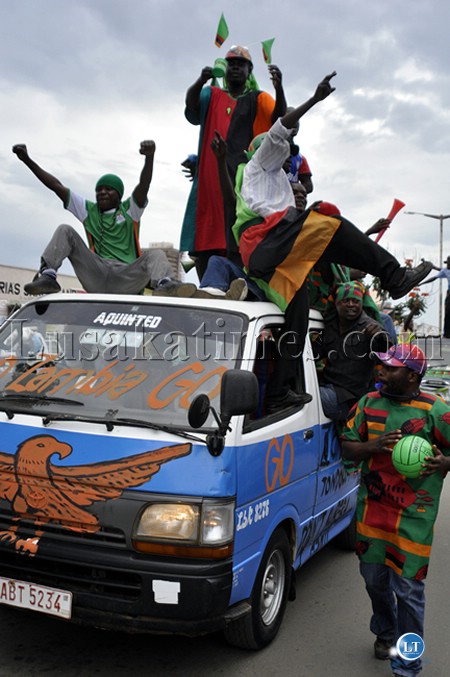
(Most minibus rides don't look like this.)
Monday, May 7, 2012
(Most minibus rides don't look like this.)
Tuesday, March 6, 2012
Double Your Nyanja! Muzungu (white person/foreigner) AND Njinga (bicycle)
This word means YOU. Many of us believe that muzungu means "white person," with Asians often grouped together in there, too, but some Zambians will insist that muzungu simply means "foreigner." But you'll also hear light skinned "bantu" Zambians being called "muzungu," as well as white Zambians. A black Zambian can even be called "muzungu" for dressing or talking like a "foreigner." So, perhaps we can just allow the definition of muzungu to be vague.
**********************
I came across this list of bike-friendly cities. We're very proud that Cape Town is there representing Africa, but would love to see Chipata on the next list!
http://matadornetwork.com/trips/the-worlds-15-most-bike-friendly-cities/
****************************
Here's an article about Chipata, complete with a slideshow of njinga pictures!
Vocabulary:
muzungu (moo-ZOOn-goo)- foreigner, white person. Slang: light-skinned African person, or African who "acts" white.
Wednesday, February 22, 2012
Katundu (luggage)
And what do you know, the first day back in America, where did we go? Garage sales! Welcome to the USA, land of lots of easily accessible cheap junk! (Or treasure, depending how you look at it.) We actually did enjoy browsing through the salaula (second hand items), and realizing that we can get some things here easily that were harder to obtain in Lusaka. But it put up a red flag in my mind: Now that we've just downsized our worldly belongings, lets try not to re-stock on things we don't necessarily need.
A few months later, we moved from my mother's house in Pittsburgh, and all the family support that went along with it, to DeKalb, Illinois, a rural University town where we didn't know anyone. Coming from Lusaka, a busy city with very accessible public transportation, we did not foresee the need of having a car before coming here. Luckily, we found an apartment near the university and a bus line going to a shopping area. (Although there is literally NO public transport OUTSIDE of this town, apart from 2 five hour windows per week.)
Needless to say, we had to get creative, African-creative at times, to get some things done.
Bicycles in the US are often used for recreational purposes, but Mathew, with his $5 salaula bike from that first day in America, and me with my family-hand-me-down bike, and Nzinzi with her bike-seat, have been using them for utilitarian purposes.
One of the things that always fascinated me about Zambia was the incredible things people could carry on bicycles, for instance: a large adult-sized live pig; or a 4 meter high stack of bags of charcoal; or the entire family (one kid in front of peddling Dad, mom behind, sitting on the carrier, with a baby tied to her back).
Here are some examples of the katundu that people carry on bicycles in Zambia, courtesy of ace photographer, Ian Hanover:


My Illinois-katundu never got that extensive, but I have definitely mastered the art of carrying myself, Nzinzi, and 10 shopping bags on my bike. Talk about a leg workout!
(How spoiled Nzinzi is with her fancy American bike-seat and helmet!)

For those of you with cars, enjoy the blessing! And hopefully we will be joining your ranks soon. For those of you without cars, who have to creatively carry your katundu, God bless you. And enjoy the good company (if you're in Africa), or the funny looks you may get (if you're in DeKalb, Illinois)! And don't forget, you're getting your exercise!
katundu (pr. kah-TOON-doo) = luggage
Monday, February 13, 2012
Chikondi (love)
(Marriage is not money; marriage is love.)
-Mathew Tembo
Valentines Day is upon us. I'm not usually a promoter of commercialized holidays, but I do like an excuse to celebrate love. Sure, romance can be nice, but you can also use the special occasion to show your friends that you love them, too! You don't necessarily need to go out and spend money on something valentiney. You could make something, bake something, knit something, write a poem or a song, choreograph a Valentine's dance, make home-made valentine's cards, anything to show your loved ones that you love them!
If you're not into the romantic love or the brotherly love, you can always celebrate football love, because the Zambian Chipolopolo boys are the Champions of the Africa Cup of Nations!
These football champions are giving some love to their new Valentine:
(article here: http://www.flavafm.co.zm/):
Here are some loving Nyanja words to get you through the day:
Kukonda (pr. "koo-KOHN-dah) = to love
Chikondi (pr. "chee-KOHN-dee") = love
Nikukonda (pr. "nee-koo-KOHN-dah") = I love you.
Nikukonda maningi (pr. "nee-koo-KOHN-dah mah-NEEN-ghee") = I love you a lot.
Nikonda Chipolopolo = I love the Zambian National Soccer Team! (Literally, "I love the bullet.")
Nikonda ______ = I love ______ (You can fill in the blank for yourself!)
Tuesday, February 7, 2012
Chipolopolo (bullet)
The sport I am talking about is football, of course! And the game I am talking about is, of course, the Africa Cup quarter final match between Zambia and Sudan. Yes, "football," known popularly in the United States as "soccer." You might note that a lesser known game, called "American football" also had a big match this weekend, the "Super Bowl."
During a breathtaking 90 minutes, Zambia managed to score, not once, not twice, but THREE TIMES against Sudan. Take that, Sudan! (Now, if it were Southern Sudan, I'd be a little more gentle.)
The nickname of the Zambian National Football (Soccer) Team is "Chipolopolo." Here's how to pronounce it: "chee-POH-lo-POH-lo." Here's another way to say it, if you're excitedly cheering: "CHEEP-oh-LO-poh-LO!"
Chipolopolo means "bullet." Yes, this is what we Zambians use to kill the other team! Metaphorically speaking, of course. The Zambian National Team are also sometimes called "The Copper Bullets." (Can anyone tell me how to say "copper" in Nyanja?) Copper mining and export is one of the biggest industries in Zambia. Here's an idea: who wants to start a copper refining and manufacturing business IN ZAMBIA? Why are we exporting raw material when we could be making more money off of the finished product? Not to mention creating jobs. Hm?
Back to football. After the Chipolopolo boys pierced the heart of the Sudanese team, the Copper Bullets are on to the next big target, and its a formidible one: Ghana. Remember... Ghana has played in the World Cup. The Ghana National Football team BEAT the USA National Soccer Team in the 2010 World Cup. (Okay, beating America in soccer doesn't say much, but still!)
Zambia is going to need to play a very good game to beat Ghana today (or tomorrow, February 8, depends what time zone you're in.) So please, wear your green, copper, black, and red, or should you so choose to join me, dress like the coach: crisp white button down shirt with jeans. Check what time Zambia is playing on your local or internet listings and watch the game. It is sure to be good! And if they win, they get to play in the final match! (Americans, this would be the "Super Bowl" of the Africa Cup. And sorry, no Madonna being pulled across the field by dozens of muscley men stepping in time.)
Vocabulary:
chipolopolo = bullet
bola (pr "BOW-lah") = football/soccer
ochaya bola (pr "oh-CHAI-ah BOW-la) = football player
Zambia iza wina (pr Zambia "EE-zah WEE-nah") = Zambia is going to win!
And in closing, here's a song to get us pumped up, by one of my favorite Zambian artists, Mozegator:
Friday, January 27, 2012
Ndalama (money)
At least my mini-kwacha key chain will increase in value (if only sentimental value) when the old kwacha notes are discontinued!
Saturday, December 10, 2011
Kuwasha (to wash clothes)
I learned the local techniques of how "kuchapa" (to wash clothes). My grandmother, who grew up on a farm in the American midwest has also filled me in on the techniques she used. (I'll share some tips at the end.)
Many of you may find the word "kuwasha," which is a synonym for kuchapa, easier to remember. Nyanja by nature is an ever-changing language, borrowing from different languages and evolving its own slang constantly.
Even though I do possess the skill of being able to wash clothes by hand, in Zambia, I liked to take the opportunity to give employment to others by paying them to do my washing. Or, in the case of my younger live-in sister-in-law, convincing her to washa for me. She was way better at it anyway. My whites never got as white and I never wash jeans with as much determination. (Thanks, Misozi! We miss you!)
Here is a Zambian TV ad for hand-washing soap that show's some of the local expertise in chapa-ing.
I am so so SO thankful that we have a washer and dryer in our new apartment in the American midwest! (Back to my roots!) We are very blessed.
That said, as a small family, especially a small family which contains one member who likes to make messes, and is potty training, and uses cloth diapers on a part-time basis, I have actually had the desire to chapa from time to time, not wait for a full load of like-colored laundry to be ready to go into the machine.
Easier said than done! The laundry detergent readily available in the US is only for washing machines, and is harsh on ones hands. Having experienced the wide variety of hand-washing soaps available in Zambia, I recently found American laundry soaps disappointing. In Zambia, we had brands such as Boom, Chik, Bullet, Chapa, Washa, Sunlight, and Omo, that I can come up with on the top of my head. These brands had products ranging from bar soap for clothes, to washing paste to washing powder.
In America, I couldn't find anything like this in the normal grocery stores! Woe was me. Until, who came to the rescue, but noneother than, my local neighborhood... Mexican grocery store!
Behold, Roma! Complete witha beautiful lady washing her clothes in a bucket. And very affordable!
Thanks to Roma, we're back in action, washing the occasional lone stinky cloth diaper or delicate green sweater that shouldn't, for its own sake, go in the washing machine with the white towels. This washing goes on in our secondary bathroom (another blessing).
A little while ago, I had a small kuwasha/kuchapa project soaking in the sink, when I started doing something else in the kitchen. I came back a few minutes later to find Miss Nzinzi Tembo doing some washa-ing herself:
What a helpful girl! And, I'd much rather have her immersed in hand-washing soap than in Tide.
Thanks for reading Nyanja Word of the Week!
Vocabulary:
kuwasha (pronounced "koo WAH shah") = to wash clothes
kuchapa (pronounced "koo CHAH pah") = to wash clothes (synonym)
kuwasha mbale (pronounced "koo-WAH-shah mm-BAH-lay") = to wash dishes
Line from Mathew Tembo song, "Next Year", being said from a wife to her husband, who she is fed up with:
kuwasha washa ni kwako (pronounced "koo-WAH-shah WAH-shah nee KWAH-koh") - washing clothes (all the time) is yours (your job)
ni = is
kwako = yours
("Next Year" and other Mathew Tembo songs can be downloaded from iTunes, Amazon, and other popular downloading sites!)
And last but not least, tips for handwashing:
Tips from Zambian Women:
* Use patience, persistance, and work up your callouses. (I learned this by observation.)
* Always work up a good lather!
* For stains on white cloth diapers (nappies), smear hard-bar washing soap on stains, then hang them up. Once they dry completely, getting the stains out is much easier!
* For stains on jeans, use washing soap with a small scrub brush, like a nail brush.
Tips from my Mother and Grandmother:
* Use REALLY HOT water, and give clothes time to soak.
* Use a washing board!